
What Can Be Altered on a Wedding Dress?
After finding your dream wedding dress, it's natural to wonder whether it will fit perfectly right away. The truth is that very few wedding gowns fit exactly as intended without professional alterations. Bridal gowns are manufactured in standard sizes, while every bride has a unique shape and proportion. That's why bridal alterations are one of the most important steps in preparing for your wedding day.
Whether you've purchased your gown from a bridal boutique, ordered it online, or inherited a family heirloom, professional alterations can transform it into a dress that looks and feels like it was made just for you.
At Alterations Design Studio Ana Penuelas in Marblehead, MA, every wedding dress is carefully tailored with precision and attention to detail. From simple adjustments to intricate couture alterations, experienced craftsmanship ensures your gown complements your figure while preserving its original beauty.
Why Wedding Dress Alterations Matter
Your wedding dress should do more than simply fit—it should make you feel confident, comfortable, and beautiful. Proper alterations improve the overall appearance of your gown while allowing you to move naturally throughout your ceremony and celebration.
Professional alterations can:
- Improve comfort
- Enhance your natural silhouette
- Ensure the correct dress length
- Provide proper support through the bodice
- Customize design details
- Help your gown photograph beautifully
Even subtle changes can dramatically improve how your dress fits and feels.
Hemming the Wedding Dress
One of the most common bridal alterations is adjusting the hem.
Wedding gowns are intentionally made longer to accommodate brides of different heights and shoe choices. During your alteration appointment, your seamstress measures the correct length while you're wearing your wedding shoes.
A properly hemmed dress should:
- Lightly skim the floor
- Allow comfortable walking
- Prevent tripping
- Showcase your shoes when appropriate
- Maintain the gown's elegant silhouette
Because many bridal gowns have multiple layers, lace edges, horsehair trim, or intricate detailing, hemming requires precision and experience.
Bodice Adjustments
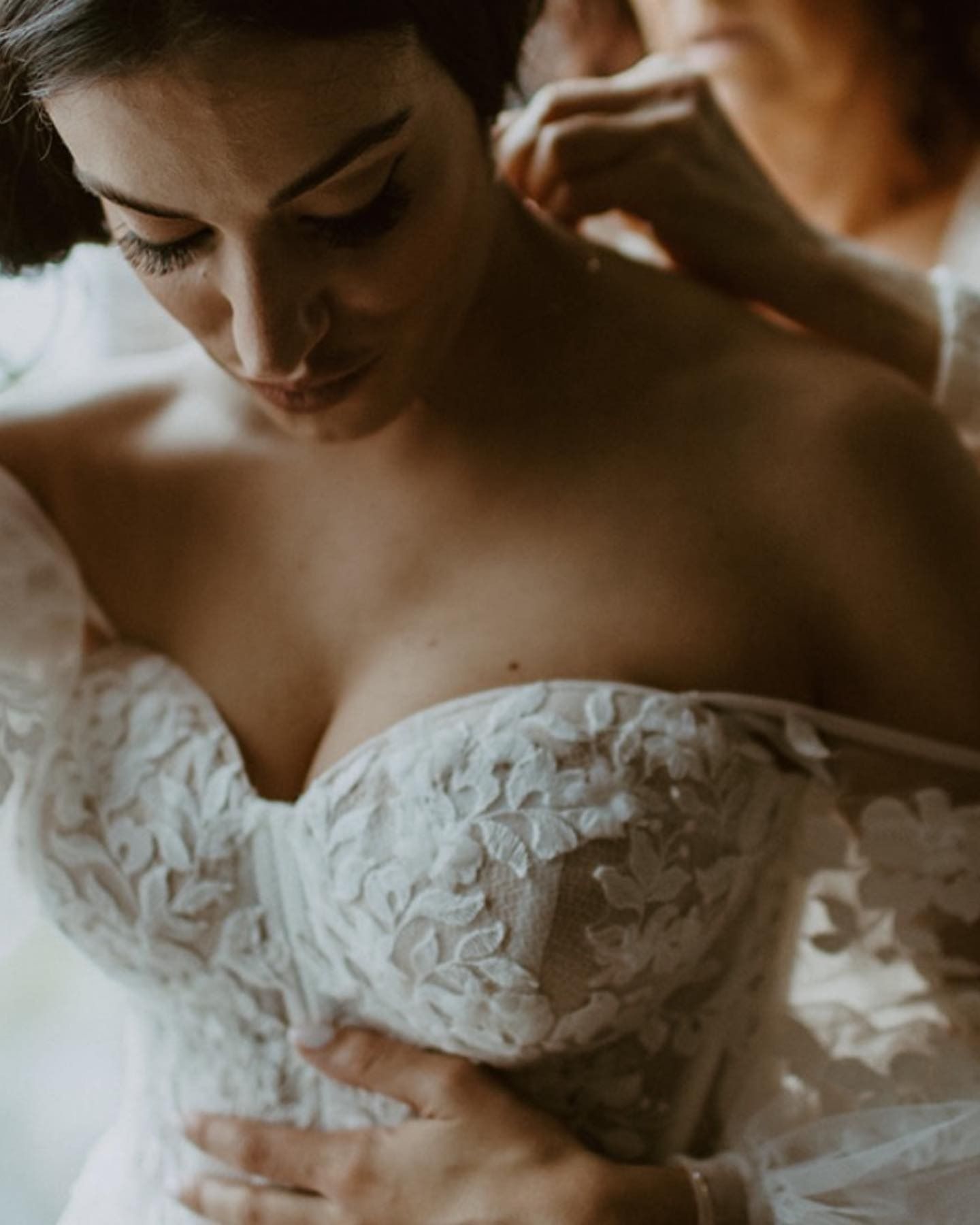
The bodice is one of the most important areas of your wedding dress. It should fit securely while remaining comfortable throughout the day.
Common bodice alterations include:
- Taking in the sides
- Letting out seams (when possible)
- Adjusting bust support
- Reshaping cups
- Improving overall structure
A properly fitted bodice eliminates slipping, bunching, or uncomfortable pressure points while creating a polished appearance.
Waist and Hip Alterations
Every bride's proportions are unique, which is why waist and hip adjustments are frequently part of the alteration process.
Your seamstress may:
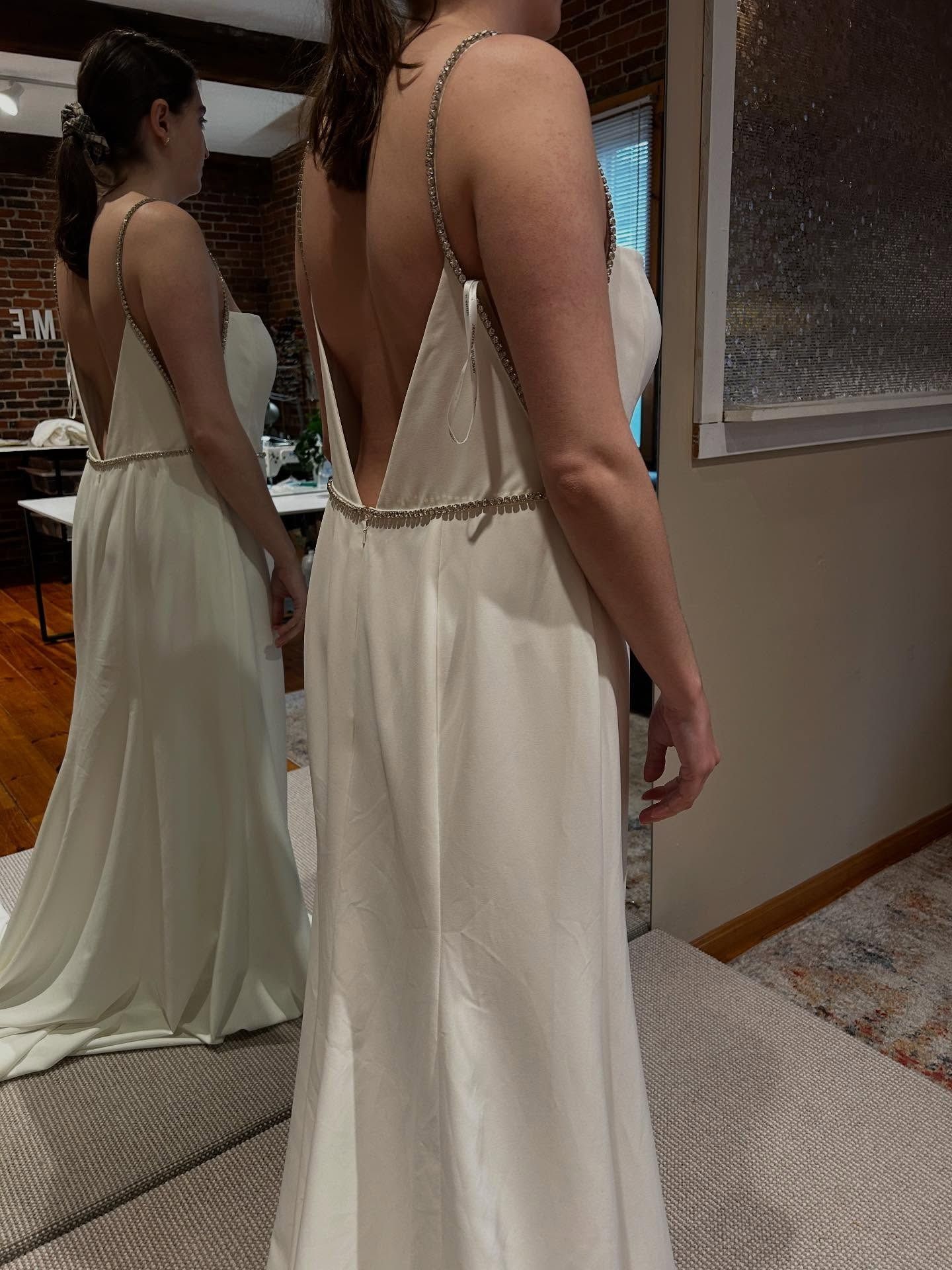
- Take in the waist for a more defined silhouette
- Adjust the hips for smoother lines
- Balance the fit between the bodice and skirt
- Improve comfort while sitting and walking
These changes create a gown that flatters your figure without feeling restrictive.
Strap and Sleeve Alterations
Straps and sleeves play an important role in both comfort and appearance.
Common alterations include:
Shortening Shoulder Straps
If straps are too long, the neckline may sit too low or the bodice may not provide adequate support.
Adjusting Sleeves
Sleeves can often be shortened, narrowed, or reshaped to improve comfort and mobility while maintaining the original design.
Refining the Neckline
Depending on the gown's construction, necklines may sometimes be adjusted to create a more flattering or comfortable fit.
These changes help personalize the dress while preserving its overall style.
Adding a Bustle
If your gown features a train, adding a bustle is one of the most practical alterations you can make.
A bustle allows the train to be lifted and secured after the ceremony, making it easier to:
- Walk comfortably
- Dance during the reception
- Prevent damage to the gown
- Keep the train clean
There are several bustle styles, and your seamstress can recommend the option that works best with your dress.
Dress Resizing
Many brides ask whether a wedding dress can be resized.
In many cases, the answer is yes.
Professional bridal alterations can often:
- Take in a gown that is too large
- Let out a gown slightly if sufficient seam allowance exists
- Improve proportions throughout the dress
The amount of resizing possible depends on the gown's construction, fabric, and available material.
An experienced bridal seamstress can evaluate your dress and recommend the best approach.
Custom Design Modifications
Some brides want more than a perfect fit—they want to personalize their gown.
Depending on the dress, custom alterations may include:
- Adding sleeves
- Adjusting the neckline
- Modifying the train
- Adding supportive features
- Refining the silhouette
- Updating vintage gowns
These couture-style alterations require advanced sewing techniques and should always be completed by an experienced professional.
What Cannot Always Be Altered?
Although many changes are possible, some alterations have limitations.
Factors that may affect what can be changed include:
- Fabric type
- Lace placement
- Beading patterns
- Seam allowance
- Dress construction
- Structural boning
This is why it's important to consult with a bridal alteration specialist before purchasing a gown that requires significant changes.
Preparing for Your Alteration Appointment
To achieve the most accurate results, bring the following items to every fitting:
- Wedding shoes
- Undergarments
- Shapewear (if applicable)
- Veil (optional)
- Accessories you plan to wear
These items allow your seamstress to tailor your gown based on your complete wedding-day look.
Choosing the Right Bridal Alteration Specialist
Wedding dresses require specialized skills that differ from everyday tailoring. Delicate fabrics, intricate embellishments, and detailed construction demand careful attention throughout the alteration process.
When selecting a bridal seamstress, look for someone who offers:
- Experience with bridal gowns
- Precision craftsmanship
- Personalized fittings
- Attention to detail
- Clear communication
- Knowledge of couture alteration techniques
Choosing the right professional helps ensure your dress is altered with care while preserving its original beauty.
Frequently Asked Questions
Can every wedding dress be altered?
Most gowns can be altered, although the extent of possible changes depends on the dress design, construction, and available seam allowance.
Can my wedding dress be taken in several sizes?
Many gowns can be taken in, but larger size changes may affect the overall design and should be evaluated by an experienced seamstress.
Can sleeves be added to a sleeveless wedding dress?
In many cases, yes. The possibilities depend on the dress style and available materials.
Is hemming difficult on wedding dresses?
Wedding dress hems are often more complex than regular garments due to multiple layers, lace, horsehair trim, and decorative details.
How long do bridal alterations usually take?
Most brides should allow approximately two to three months for the complete alteration process to accommodate multiple fittings and any necessary refinements.
Trust Your Wedding Dress to Experienced Hands
Your wedding dress is one of the most meaningful garments you'll ever wear, and professional alterations ensure it fits beautifully from every angle. Whether your gown needs simple hemming, bodice adjustments, a bustle, or detailed couture modifications, expert craftsmanship makes all the difference.
At Alterations Design Studio Ana Penuelas, brides in Marblehead, MA, receive personalized bridal alterations designed to enhance the fit, comfort, and elegance of every gown. With careful attention to every stitch and detail, your dress will be tailored to help you look and feel your very best on your wedding day.
Recent Posts